Dear Colleagues,
Over the past month, I have written about the future of education in the Brain Age and about what it means for Montclair to be a formative university—one that seeks not only to educate the mind but to contribute to holistic human lives. This week, I want to ask a question that follows naturally from that vision: How do we know whether we are actually forming our students in the ways we hope?
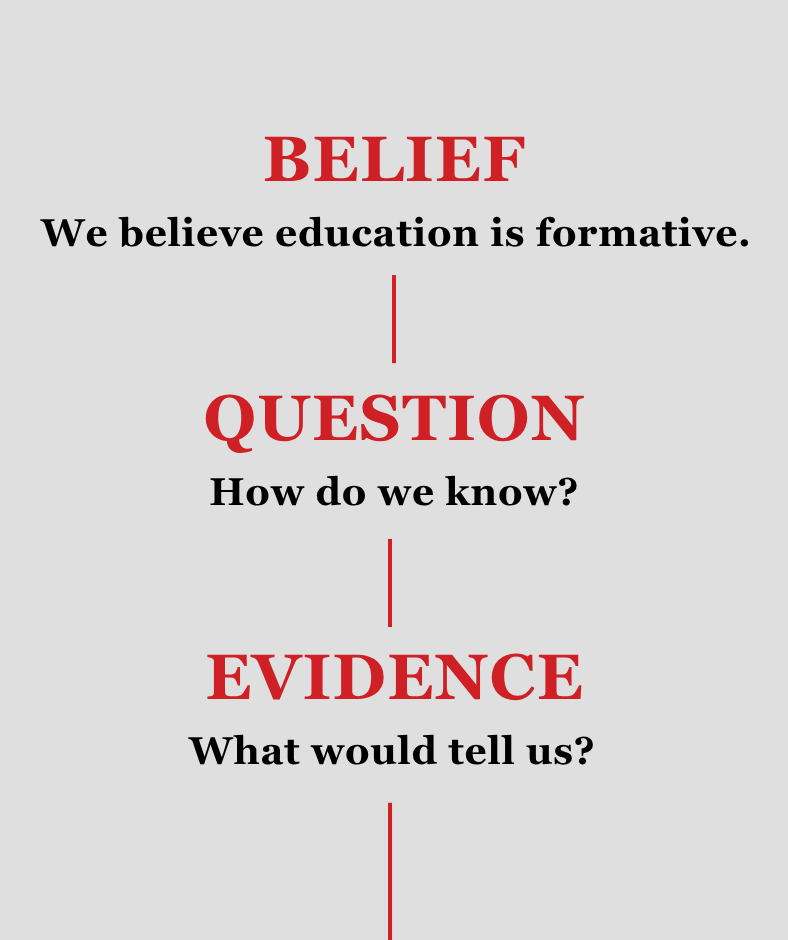
We believe education is formative. But what does it mean to make that claim seriously? How do we know whether—and how—we are changing the lives of our students?
Every university has a lofty, aspirational mission. As a
|
|
|
|
|
learning organization, we must be willing to put our mission to the inquiry test. We must develop ways to gather and interpret evidence of what we are accomplishing.
This is not a novel or foreign idea, and we are not starting from scratch. Montclair already has deep experience asking important questions about our students' experiences.
For example, under Provost Gonzales’ leadership, we developed the Student Belonging instrument as one way of understanding our 'servingness'—how effectively we are meeting the needs and aspirations of our students. We are now in the fourth year of administering this institution-wide survey, examining what it tells us about what we are doing well, where we are acting equitably, and where we have more work to do.
As we begin a new academic year, we have a fresh opportunity to expand the scope and breadth of this work in two fundamental ways:
|
- From Belonging to Formation: The survey began with a well-established body of scholarship connecting students’ sense of belonging to persistence, success, and their overall educational experience. Over time, colleagues across the University have used it as a platform for asking broader questions about the student experience. We now have an opportunity to revisit the instrument from an expanded starting point—one that retains belonging as a vital anchor while incorporating other facets of holistic human development. We are not moving away from belonging. We are building outward from it.
|
"We are not moving away from belonging. We are building outward from it."
|
- From One Snapshot to the Formation Story: The original survey was designed as a snapshot in time. Moving forward, we want to understand how the Montclair experience shapes students over time. What do they bring with them when they arrive? What changes during their years here? Which capacities develop, and which remain stable? Where do we see differences across backgrounds and programs? In short, we need to move from a snapshots toward a dynamic story of development.
|
|
|
Beginning with the Questions
|
I want to bring colleagues together from across the University to explore this vision.
This work should not begin with the transactional question, "What questions should we add to the survey?" It must begin with more fundamental inquiries: What do we mean by formation? Which dimensions of student development are most central to a Montclair education? What does current research tell us about how these capacities develop? What can a university reasonably influence? How do we measure meaningful change over time without reducing complex human growth to a single number?
This is inherently interdisciplinary work.
It will require expertise in human development, psychology, philosophy, the social sciences, statistics and psychometrics, qualitative inquiry, and survey design. It requires the lived wisdom of the faculty and staff who teach, advise, mentor, and support our students every day. And it requires the participation and perspective of the people at the center of the work: our students. If you are interested in these fundamental inquiries, are already doing work related to student formation or are simply interested in engaging in this work, please complete this brief interest form.
|
|
|
Assessment as a Way of Learning
|
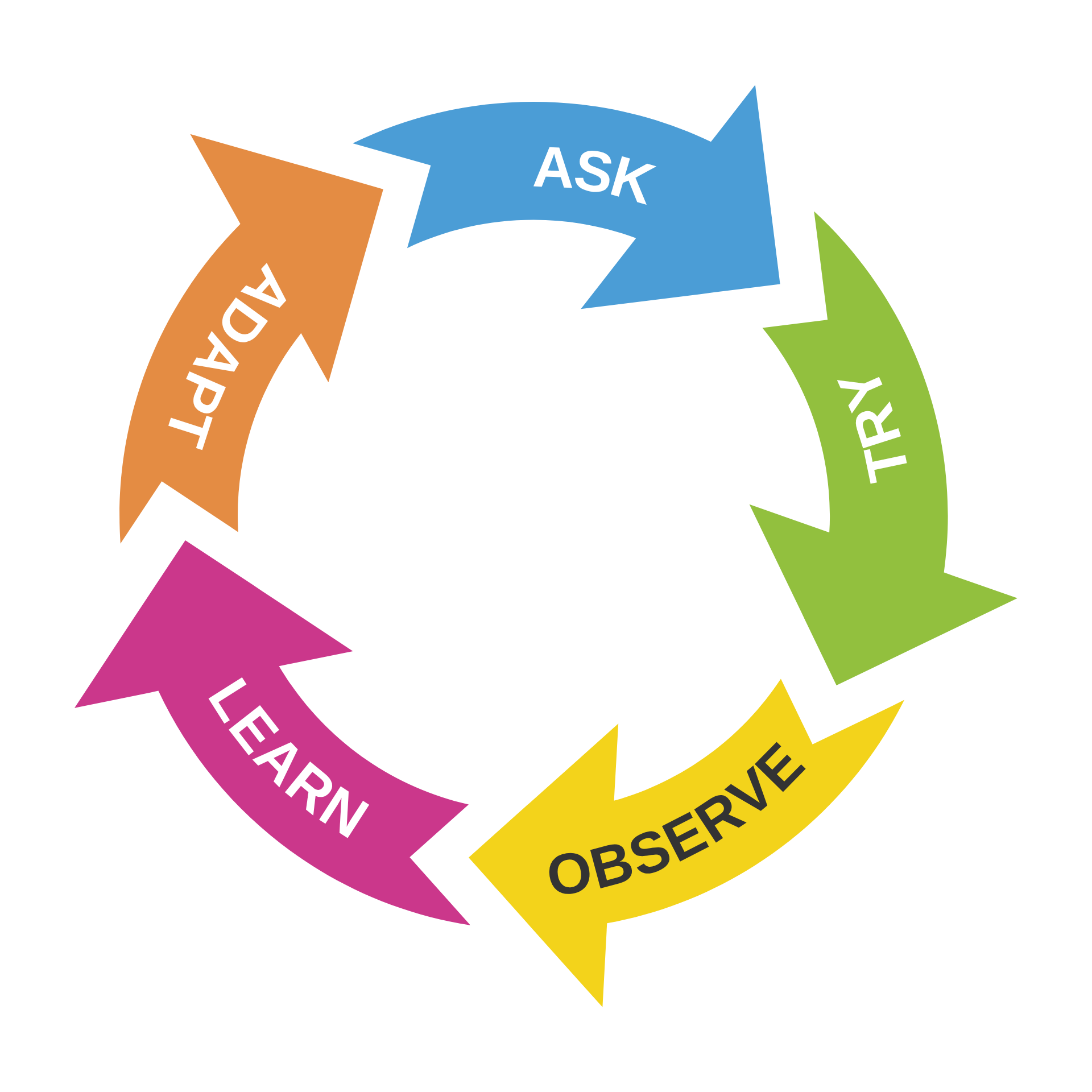
We will learn from the process of designing the instrument, and we will learn from the story it ultimately tells us. Assessment should not be an addition to the work we do; it should be woven into the fabric of the work itself. It helps us see what is happening, direct resources where they matter most, and continuously adapt. If we are a formative university, assessment is how we learn whether we are actually becoming what we claim to be.
With warm regards,
Fatma
|
|
|
|
P.S. Many thanks to several colleagues whose insights and expertise helped articulate these ideas. They include Chris Donoghue, Jennifer Urban, Kyle Dobbeck, and Danielle Insalaco-Egan.
|
|
|
|
Introducing Academic Affairs Division Assessment
|
By Kyle Dobbeck, Senior Director of Curriculum
|
|
|
|
Every academic program at Montclair already assesses its own learning outcomes. Our faculty have done this critical work for years by applying their own disciplinary expertise and aligning the process with their programmatic contexts. As experts, faculty know what questions to ask in their fields of practice and what it means to calibrate assessment toward the expected results in disciplinary and professional communities. Though the procedure of assessing programs is similar across the university, the actual content and answers to the questions are (and must always be) context-specific.
Through the process, we ask what is working and what is not,
|
|
|
|
whether we are meeting our intention in terms of what students know and are able to do, and if we are setting students in the right direction during their academic journey at Montclair. In answering these questions, the result is often an affirmation that what we are doing is indeed effective. At its best, the process catalyzes critical conversation in our programs and departments, the kind of dialogue that leads to changes to curriculum. As a self-proclaimed curriculum nerd, I would suggest that dialogue is where the real magic happens.
Dialogue about reaching program goals requires developing shared understanding about what needs to occur at the course or program level to ensure that we are setting our students in the right direction. Approaches are changed and then new questions are asked again with new results. In a certain sense, this is the essence of how academic disciplines are recreated and reinforced, with practices, skills, and bodies of knowledge reinstantiated into what it means to study a particular field. In the curriculum and assessment unit in the Provost’s Office, Joanne, I, and the team are fortunate to support that interconnected process, to see the work unfold continuously, and to see it realized in the programs published in our catalog each year.
That work helps faculty maintain stewardship of their degree programs and makes clear how each program is doing. Broader questions about how we are doing together, and what our academic enterprise is becoming, belong to Academic Affairs as a whole. We asked them collectively and in a systematized fashion as part of the Middle States reaffirmation process. As a continuation of that process, we have been developing a framework for Academic Affairs to assess its own work.
The central premise of division assessment is straightforward. This past Spring, the University published its Mission and Institutional Goals as part of the Strategic Framework. These are our directions. Division assessment is our compass.
In the same way as program assessment, the process may be broad, but questions are best posed and answered in context. A question about a college must be answered in the college. What a division office can do is connect the parts and help organize a coordinated effort to support the work. Our assessment framework must do four things:
|
- Ensure that data and evidence are available, consistent, and in usable form for the experts who need them.
- Help us tell the story of what we are becoming, and how we are getting there.
- Make room for each college and unit to express its points of distinction while contributing to our shared Institutional Goals.
- Promote the sharing of good ideas and the learning that comes from our work.
|
What one program discovers can inform a college, and what a college learns can shape what the division does next. Functionally, that is the spirit and intention of introducing division assessment, such that Academic Affairs is a division that learns from its own work.
One area of primary focus this year is student success and retention. These are foregrounded in Montclair’s commitments and belong to everyone. Nearly everything we do in Academic Affairs plays a part. That is why student success and retention can only be understood together, and why these are the right starting place for a division learning from its own work.
We are beginning with organizing what information and data would be useful to those that need it. What must be in our collective, shared data pool? What leading indicators could help experts make more informed decisions and make those decisions earlier? After that, we will begin conversations based on unit context. How are our institutional goals put into practice in your unit? What are your goals and initiatives? What are you already doing, and what would help support that work?
On behalf of my colleagues on your curriculum and assessment team, we are looking forward to supporting the dialogue to come.
Warm regards,
|
Kyle Dobbeck
Senior Director of Curriculum
|
|
|
|
|
Congratulations and Kudos
|
|
|
|
Stefanie Brachfeld Receives National Outstanding Educator Award
|
Please join me in congratulating Stefanie Brachfeld, Vice Provost for Research, recipient of the Association for Women Geoscientists' 2026 Outstanding Educator Award. This national honor recognizes exemplary achievement in mentoring, teaching and outreach, and the committee was especially impressed by Stefanie's significant contributions across all three areas. This well-deserved recognition reflects her extraordinary dedication as an educator and mentor.
|
|
|
Montclair's Sigma Delta Pi Chapter Earns National Honor
|
Congratulations to chapter adviser Valentín Soto and the student members of Montclair's Delta Chi Chapter of Sigma Delta Pi, the National Collegiate Hispanic Honor Society, named one of only 12 "Honor Chapters" nationwide for 2025-26. This marks Montclair's 11th recognition since 2001 and reflects the chapter's outstanding work, supported by colleagues in Spanish and Latino Studies and the College of Humanities and Social Sciences.
|
|
|
|
|
The Chronicle Virtual Forum: AI, Grading & Assessment
|
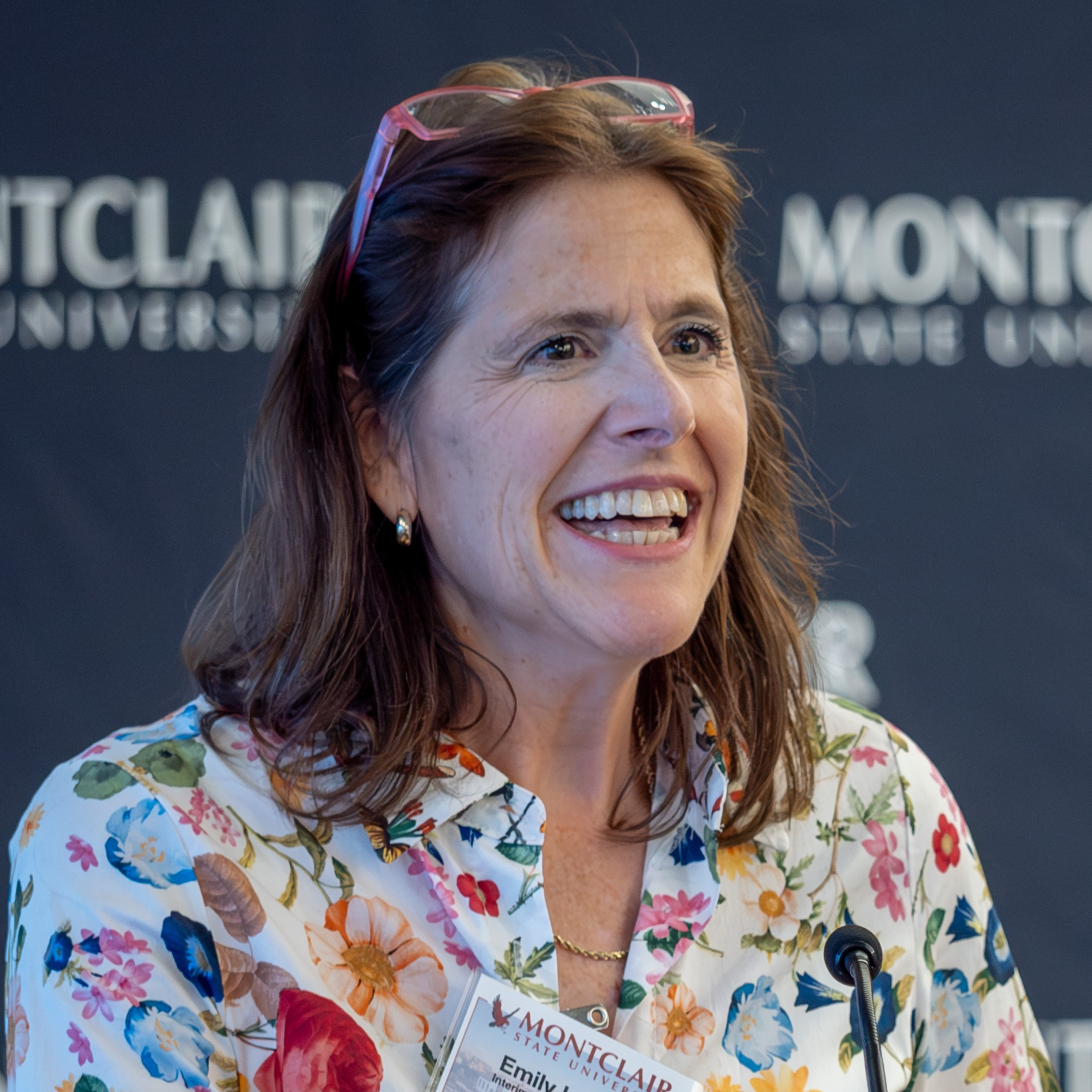
Join The Chronicle on Tuesday, September 1 (today!), at 2 p.m. for "Navigating AI for Grading and Assessment," a virtual forum featuring Senior Associate Provost for Faculty Affairs, Emily Isaacs, as a panelist.
The discussion will explore AI-assisted grading, assessment policy, and balancing efficiency with meaningful learning.
|
|
|
|
|
|
'Thinking Together' with Interim Provost Mili
|
|
|
|
Some of the most interesting ideas begin with a question, a curiosity, or a conversation that has no predetermined outcome. I am setting up a biweekly time for us to step away from the everyday and spend some time exploring questions and possibilities that matter to the university.
Every other week, we’ll gather for an informal conversation around a question, an idea, or something worth wondering about. There will be no presentation and no expectation that we arrive with answers—just an invitation to think, listen, and explore together.
Interested in joining? Sign up here.
|
|
|
|
- Wednesday, September 2: New round of SEEDS Course Certification begins.
- Monday, September 7: Deadline to register your department or office for the University Street Fair at Homecoming on Saturday, October 3.
- Wednesday, September 9: Deadline to register as an employer for the Part-Time Student Job Fair on Wednesday, September 16.
- Friday, September 11: Deadline to report scholarly activities from July 1, 2025 - June 30, 2026 to OIRE. For questions, please contact the Director, Craigon Campbell, at campbellc@montclair.edu.
|
|
|
|
|