Dear Colleagues,
We are constantly bombarded with a single, urgent narrative: AI is coming for entry-level jobs, and deep thinking is becoming obsolete. These anxieties are real, but they risk distracting us from a deeper opportunity: to redefine what it means to learn, think, and create in this moment. Our responsibility is not only to prepare students for the world as it is, but to empower them to imagine and build the world as it could be.
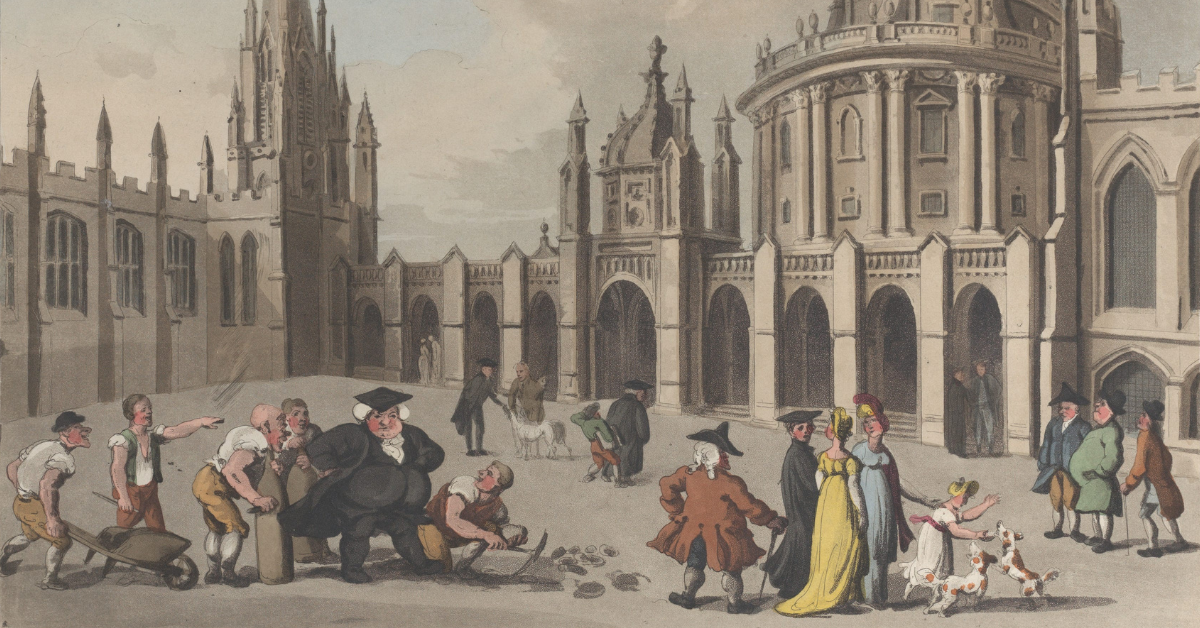
This responsibility is not unique to our era. Every generation redesigns education to address immediate realities while investing in the values and capacities that shape the future. Higher education has always balanced two purposes: preparing students to contribute today while cultivating the ideas and values that shape tomorrow.
Both are critical. However, it is always tempting to prioritize the immediate present over the long term. Roman Krznaric warns against "the present colonizing the future", our tendency to privilege today's demands over tomorrow's possibilities. Compounding this challenge is what Morson and Ottino call the "illusion of
|
|
|
|
|
inevitability": the mistaken belief that the future is fixed and our role is merely to adapt to it. If we only teach students to adapt to the world as it is, we rob them of education's most essential promise: the power to shape the world as it could be.
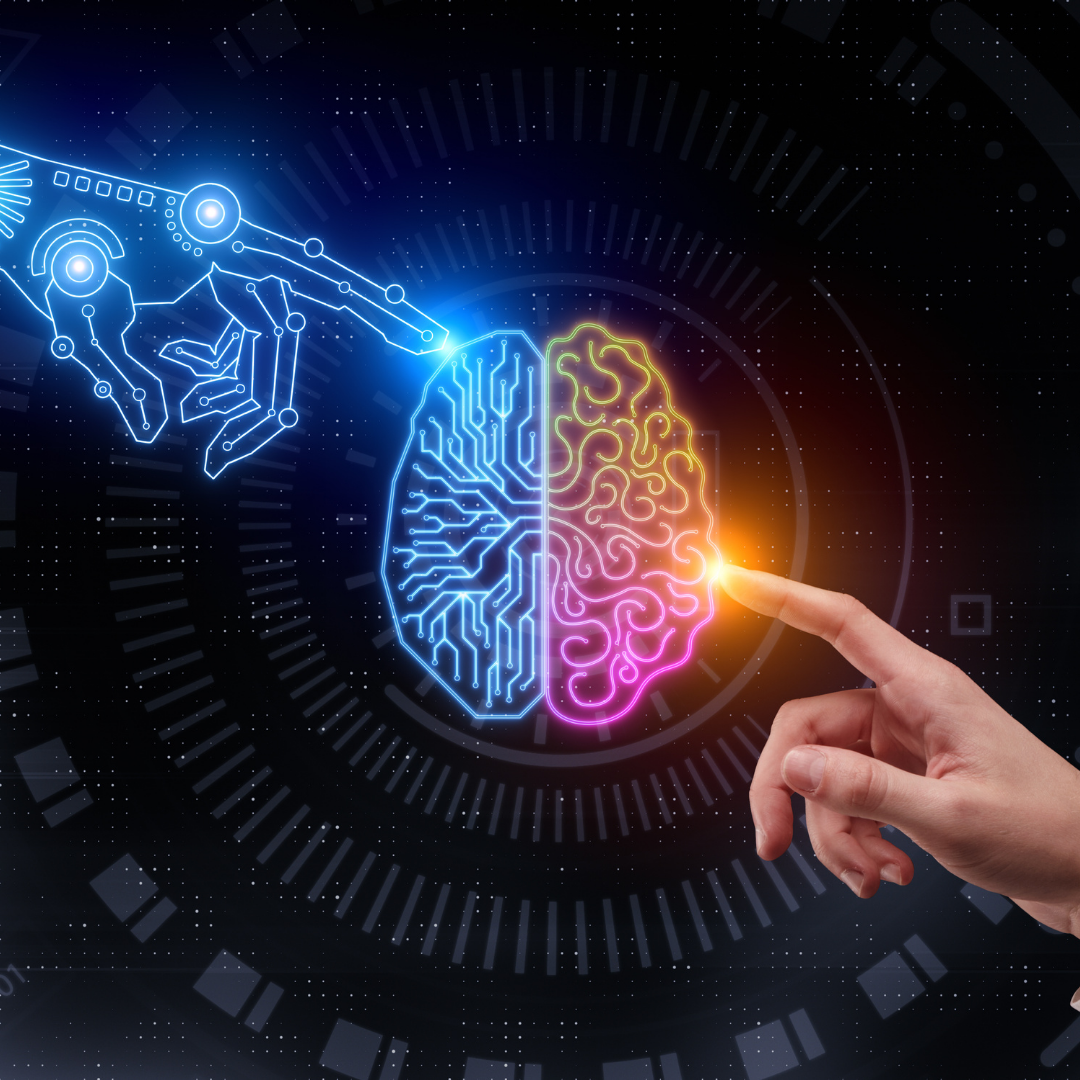
Indeed, adaptation is reactive and passive; creation is generative and proactive. In an era when machines increasingly perform prediction, retrieval, and routine cognitive work, our educational responsibility may be shifting toward the capacities that allow human beings to imagine possibilities, exercise judgment, make meaning, and act wisely amid uncertainty. In a recent World Economic Forum publication titled Human Advantage: Stronger Brains in the Age of AI, researchers argue that now is the time to invest deeply in "Brain Capital" through education. They emphasize that higher-order cognitive, emotional, and social capacities will be the primary drivers of individual and collective thriving and success. As machines increasingly automate knowledge retrieval, prediction, routine workflows, and technical processes, our human focus must shift toward agility, openness, imagination, and deeper reflection. As the report notes:
"We are entering an era where the skills of prediction are largely being offloaded to machines. But the skills of imagination? Those remain uniquely human."
So the question for us is: How are we, at Montclair State University, revising our education, services, and scholarship to meet the aspirations of this age? How are we exercising our imagination to shape our thinking, decisions, and activities in response to this transition from the information age to the brain age?
Our goal is not to produce students who are merely “AI-proof,” but graduates who are "AI-prime", individuals who know how to partner with intelligent technologies while contributing distinctly human capacities that machines cannot replicate. Graduates who see the future as their canvas, who ask better questions than machines can answer and who see ambiguity not as a hurdle, but as an invitation to create and who have the judgment, resilience, empathy, and sense of purpose to decide what is worth creating.
Designing the higher education system of this era is our collective responsibility. I would like to begin by highlighting four capacities that I believe deserve particular attention, and some of the ways Montclair is already cultivating them.
|
|
|
|
1. Radical Imagination: Designing Multiple Futures
|
|
|
|
It is no accident that President Koppell’s investiture address was titled The University of Your Imagination and centered around imagination. That call applies to all of us, including, and especially, our students.
For generations, higher education operated on a linear model: choose a major, pick a career, execute. Today's world requires a far more agile mindset. This academic year, we are introducing a pilot curriculum on Life Design, leveraging design-thinking principles to help students move beyond a singular, rigid career track. Instead, students learn to imagine and prototype multiple possible futures across their education, career, and personal life, a reflective process they can revisit and revise throughout their lives. This effort is led by Dr. Danielle Insalaco-Egan, Associate Provost for Undergraduate Education, who will share more in a future issue. It is one example of how we can help students move from preparing for a future to imagining and designing one.
This initiative directly addresses a broader need articulated by Sorett and Khan in a recent Inside Higher Ed piece, where they note that "students are searching for a credible way to connect their education to the larger question of how to build a life under conditions they experience as politically fragmented, economically precarious and morally disorienting."
As mentioned in our July 21st issue, we will soon be calling on everyone’s imagination to propose new ideas and innovations around every facet of our work.
|
|
|
|
2. Empathy: Seeing and Embracing the Other (and Our Future Selves)
|
|
|
|
Being able to think deeply from alternative perspectives is foundational to our identity as a majority-minority, Hispanic-Serving Institution. This focus is intentionally embedded in our general education curriculum, SEEDS, which prepares our students to navigate a complex, pluralistic society through core values like Social Justice and Equity.
But empathy is also a critical tool for future-thinking. Psychological research reveals a fascinating phenomenon: we naturally perceive
|
|
|
Image: TED; color adjusted for publication.
|
|
|
|
our “future self” as a complete stranger and thus, in our present state we do not well consider the needs and well-being of that future self. Thinking about the future expands empathy toward others, and empathy toward others opens our imagination to more possible futures. Cultivating empathy helps students make decisions today that honor both their broader communities and the people they themselves will become.
I want to use this opportunity to thank and congratulate our SEEDS Advisory Board for their innovative work under the leadership of Professors Esperanza Brizuela-Garcia and Kate McCaffrey, and continuing under the leadership of incoming chairs Thomas Herold and Manveer Mann.
|
|
|
|
3. Deep Focus and Immersion: The University as a Sanctuary for Thought
|
|
|
|
We frequently hear from faculty about the challenges students face when engaging with long, complex texts and sustained arguments in a world dominated by rapid, bite-sized media. In her essay "Why Universities Should Be Like Monasteries," historian Molly Worthen argues that higher education must serve as a sanctuary for deep, uninterrupted attention. Parker Palmer speaks similarly of the university as a space where we cultivate "the ability to hold tension in life-giving ways," refusing quick, superficial answers so that intellectual tension
|
|
|
|
expands our hearts and minds rather than breaking our focus.
Our goal is to cultivate not only stamina for intellectual immersion, but the capacity for reflection, patience, and intellectual humility that deep engagement makes possible. This can be achieved by intentionally designing temporal and physical spaces for students to sit with difficult, ambiguous concepts, wrestle with them, and construct meaningful insights rather than settling for quick answers. Dr. Emily Isaacs, Senior Associate Provost for Faculty Affairs, is coordinating several initiatives with faculty who are designing these sanctuary spaces; she will report on this soon and invite others to join.
|
|
|
|
4. Technological Fluency: Critical Mastery Over Tools
|
|
|
|
Technological fluency is rightfully highlighted by the WEF as a core competency for future generations. Preparing “AI-prime” graduates requires moving beyond mere technical competence to critical technological fluency. It is not enough for students to know how to use AI models; they must understand their underlying logic, ethical implications, and limitations. By developing a nuanced understanding of where algorithms excel and where human judgment is indispensable, our students shift from passive consumers of technology to discerning, ethical directors of it.
The goal is not simply technological competence, but the wisdom to decide when, why, and whether a technology should be used.
The University AI Committee, co-led by Interim Chief Information Officer Suresh Murugan and
|
|
|
|
Senior Associate Provost Isaacs, is currently working on a university-wide graduation requirement around AI. Because technological fluency extends beyond AI, we will also be re-examining our SEEDS requirements relative to technological fluency.
Continuing the Conversation
These four areas are only a beginning.
They point toward a larger question that I hope we will explore together throughout the coming academic year:
If the Brain Age changes what machines can do, what must education do differently to develop what human beings can become?
The answer will not be found in a new technology, a new requirement, or a single program. It will require us to think more expansively about the purposes of education and about the capacities we want our students to develop over the course of their lives.
That means asking not only what students need to know, but how they learn to think, imagine, relate, persist, choose, create, and contribute.
I also want to hear from you. What human capacities do you believe will matter most for our students' futures? More importantly, what educational experiences help students develop those capacities?
What could we do, in our classrooms, laboratories, studios, advising relationships, co-curricular experiences, and campus communities, to make those capacities more intentional parts of a Montclair education?
Your imagination, your questions, and your pedagogical experiments are essential to this work.
And on August 18, as we prepare to welcome our students back for the first day of classes, I want us to take the next step together: to ask not only what we want our students to know, but who we want them to become.
I hope you will carry these questions with you as we begin the academic year.
With my best regards,
Fatma
|
|
|
Kick off the fall semester with a practical half-day virtual workshop, Wednesday, August 19, 9 a.m. - 12:30 p.m., featuring sessions on Canvas, AI, active learning, and strategies for a successful first week of classes. Plenty of time will be built in for questions and discussion throughout the program.
|
|
|
|
- Opening Day GPC/DPD Meeting
|
Graduate Program Coordinators (GPC) and Doctoral Program Directors (DPD) are invited to attend this joint meeting hosted by the Graduate Center and Graduate Admissions, Thursday, August 27, 8:30-9:30 a.m., in the Center for Environmental and Life Sciences, Room 120. The session will include updates from both offices and campus developments impacting graduate education.
|
|
|
|
Join President Koppell for his annual Opening Day Town Hall, Thursday, August 27, 11 a.m., in the Alexander Kasser Theater. Following the event, all faculty and staff are invited to a spirited clap-in at Yogi Berra Stadium to welcome students, followed by the campus community carnival and lunch in Lot 23, at 12:30 p.m.
|
|
|
|
|