Dear Colleagues,
The most transformative innovations are rarely entirely new inventions. More often, they emerge from recombining what already exists in new ways.
In Where Good Ideas Come From, Steven Johnson challenges the myth of the solitary, lightning-bolt breakthrough. Instead, he shows that innovation happens when existing tools, skills, and perspectives converge. New discoveries expand what he calls the “adjacent possible,” the realm of capability made reachable by what we already know and can do. This is precisely the mindset guiding our University Design Studio: bringing together existing institutional strengths in new configurations to serve new learners.
One of Johnson's key examples is an infant incubator designed for regions where medical equipment was difficult to maintain. Instead of attempting to replicate expensive, fragile hospital technology, designers paired the core function of an incubator with what was already abundant locally: auto parts and the mechanics who knew how to repair them. The result was not merely a cheaper device; it was a resilient, locally sustainable solution made possible by connecting elements previously kept in separate siloes.
Higher education has had its own encounters with the promise of technological disruption. Over a decade ago, massive open online courses (MOOCs) were heralded as a force that would fundamentally transform, or even render obsolete, the traditional university.
That particular tsunami never arrived. Yet MOOCs did challenge us to rethink what technology makes possible in education. They demonstrated that we could distribute content to tens of thousands of people, while simultaneously proving what technology alone cannot provide. Education remains a fundamentally human and social endeavor. It relies on connection and structure: peer interaction, timely feedback, social context, belonging, and responsiveness to individual learners.
The lesson was clear:
|
|
|
|
|
|
Technology alone does not transform education.
|
Transformation happens when technology is paired with the relational elements that make learning meaningful.
|
|
|
|
This is how we think about Montclair Unbound.
Unbound is not merely Montclair State University digitized. It is an intentional effort to extend the distinctive essence of a Montclair education to learners whose lives, schedules, or locations don't fit traditional molds. We are combining our core academic strengths with modern online platforms, dedicated support services, AI tools, strategic partnerships, and fresh pedagogical models.
Rather than simply moving courses online, we are asking: What becomes possible when we recombine the core elements of Montclair to reach more learners without losing who we are?
I encourage you to read Marc Austin’s guest editorial below, which outlines the boundaries Montclair Unbound is beginning to dissolve and the possibilities we are actively exploring.
Best regards,
Fatma
|
|
|
|
Montclair Unbound: Beyond Online
|
By Marc Austin, Vice Provost and Managing Director for Montclair Unbound
|
|
|
|
Students who leave before finishing rarely cite the coursework as the reason. They cite cost, stress, and the collision between their degree and the rest of their life, a shift that changed, a parent who got sick, a child who needed them, a commute that stopped making sense. Montclair can't solve all of that. But we can stop making the structure of a degree one more thing working against them. Montclair is one of the more affordable universities in New Jersey which makes us the right choice for working learners, if we can meet them where they are. That is the founding premise of Montclair Unbound.
Online is where we begin this effort, and that work is well underway: This year we will create well over
|
|
|
|
|
100 online courses that are part of fully online programs in collaboration with faculty across 23 departments, supported by our new Unbound Learning Design team (formerly part of ITDS) and course development stipends. But online delivery is just the starting point for the Unbound effort. Unbound seeks to address a broader question: what can technology and thoughtful design do to make a Montclair education more personal, more flexible, and more connected?
As we design with technology (not “because” of technology, as Fatma suggests in her note above), what forms a student as a thinker and a person is the designed relationship, not shared physical space. That relationship is built by faculty. Unbound doesn't change who shapes the curriculum or leads the classroom; it changes what the classroom can be.
Practically, we're working on three things:
Letting students move between modalities. A student should be able to shift between in-person, hybrid, and online sections as life demands without losing credits, standing, or their advisor. This is largely an operational and policy challenge, and we're working through it with the registrar, advising, and academic departments.
Bringing Unbound learners to campus – for a reason! We should make coming to campus “special,” especially for those who do not live nearby. Low-residency intensives, a weekend in NYC, a short immersion abroad. The university can be seen for this segment of our community as “instruction online, but experience in person.” These are the parts of a program that only faculty can design, and we want to support a few pilots.
Building Montclair hubs across the state. Imagine learner hubs where online students find quiet study space, in-person support, and a physical connection to the University. This one is still in concept that we will shape together, so let us know what applications of a Montclair Hub might be developed to support our remote learners across the state.
How to get involved: send us a note/question to “online@montclair.edu”:
|
- Explore ways to enhance your existing Montclair Online program with experiential learning opportunities, particularly through partnerships with companies, organizations, or agencies.
- Participate in our new online faculty training for Unbound programs. Even if you aren’t part of a program we would love to have you join, learn about how the Unbound platform operates and offer your suggestions as it’s still in an early stage of development. The next session is Monday, October 12 - Sunday, October 18. Register here.
- Send your questions, we'd rather hear them now than later – and many of our ideas are in a conceptual stage so it’s a good time to get involved.
|
Marc Austin, Ph.D.
Vice Provost and Managing Director for Montclair Unbound
|
|
|
|
|
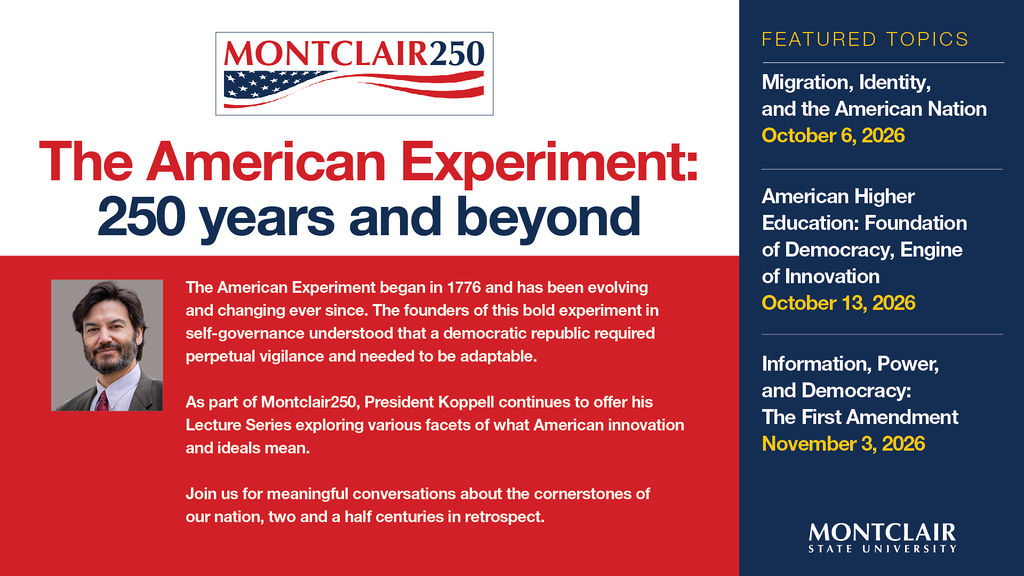
President Koppell's Lecture Series
|
|
|
|
- Migration, Identity, and the American Nation
|
Today, October 6, 2:30 p.m., College of Communication and Media, Presentation Hall
|
Explore how migration has influenced American identity, citizenship and belonging—and how that history informs today’s debates over borders, inclusion and national identity.
|
- American Higher Education: Foundation of Democracy, Engine of Innovation
|
|
|
Tuesday, October 13, 2:30 p.m., Cole Hall, Room 340
|
Trace the evolution of American higher education as a driver of democracy, discovery and economic progress while considering today's questions about the purpose and value of universities.
|
|
|
Rethinking Our Place in the Age of AI
|
Join us Tuesday, October 27, for the inaugural event of The Wide World of Ideas, a new speaker series bringing our community together to explore timely questions and ideas shaping our world.
Educator, ethicist and author Mark Peres will lead "A New Story for the Age of AI: When Intelligence Is No Longer Exclusively Human," exploring how increasingly capable AI is challenging long-held distinctions between person and tool, relationship and simulation, autonomy and dependence—and what those shifts may require of our ethical frameworks.
The presentation will take place from 4–5 p.m. in the Feliciano School of Business, Room 140, with time for dialogue and Q&A. An informal reception and book signing of The Accord will follow from 5-6 p.m., offering opportunities to connect with Mark Peres. Complimentary copies will be available to the first 50 registrants. Register early and join the conversation.
|
|
|
Register Your Office for Student Appreciation Week 2026
|
Montclair's 5th Annual Student Appreciation Week returns October 12-16, and we encourage all offices and units to participate. We want to ensure strong representation from Academic Affairs by hosting an activity on either campus, sharing resources or offering food, giveaways and other ways to celebrate our students.
Registration has been extended through Wednesday, October 7. Monday, Thursday and Friday still have availability, especially during the early morning and later afternoon. Contact Tara Morlando Zurlo at morlandot@montclair.edu with any questions.
|
|
|
Call for Proposals: AI Faculty and Staff Showcase
|
Faculty and staff are invited to submit proposals for the fourth annual AI Faculty and Staff Showcase, this year entitled "Higher Ed in the Age of AI," on Friday, December 11. Proposals may explore how we use AI productively, where we deliberately choose not to use it and the thinking behind those decisions in teaching, learning and work.
Submit a proposal by Friday, October 30. For questions, please contact Catherine Keohane at keohanec@montclair.edu or faculty@montclair.edu.
|
|
|
Nominate a Colleague for a 2027 Presidential Excellence Award
|
Nominations are now open across 22 categories recognizing faculty, staff, individuals and teams who demonstrate excellence in their work and service to others. The deadline to submit a nomination is Tuesday, December 1 at 5 p.m.
|
|
|
|
|
Help Spread the Word: Fall Career & Internship Fair
|
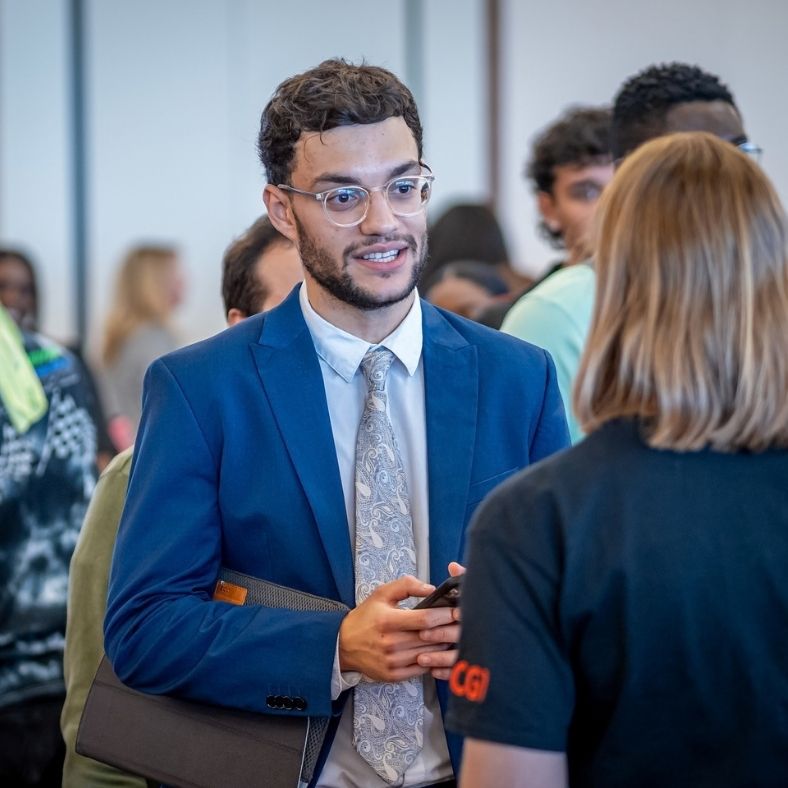
The Fall 2026 Career & Internship Fair will take place tomorrow, Wednesday, October 7, from 1-4 p.m. in University Hall's Conference Center. Faculty and staff are encouraged to share the event flyer with their students.
Open to all students, alumni and community members, the fair offers attendees an opportunity to connect with 80+ employers and explore internships and career paths. Registration is required on Handshake.
|
|
|
|
|
|
Celebrate Italian American Heritage Month
|
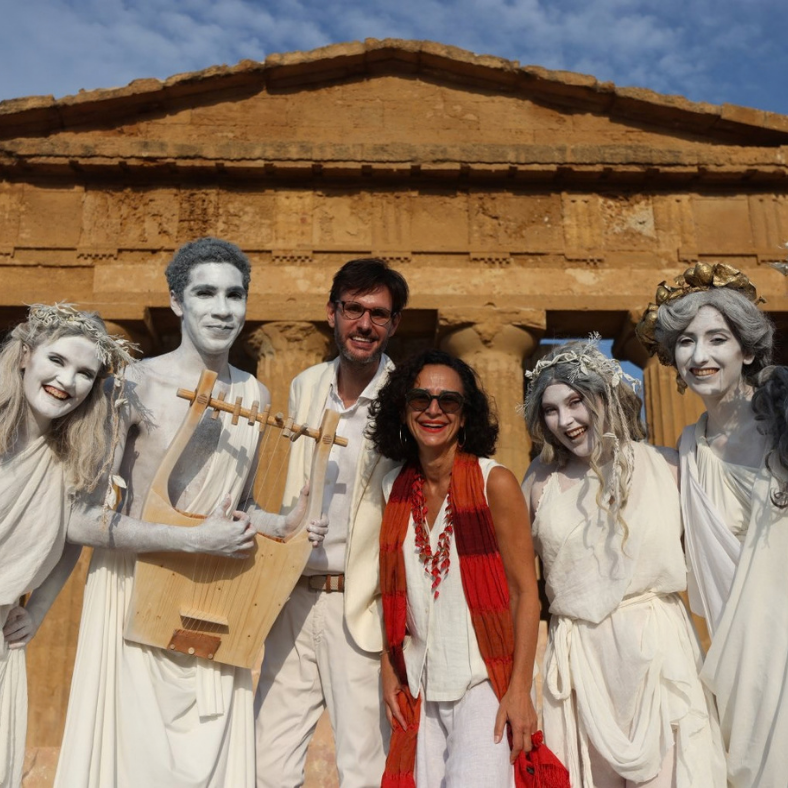
The Coccia Institute for the Italian Experience in America invites the University community to celebrate Italian American Heritage Month. On Wednesday, October 7, gather for the 2nd Annual Flag Raising at 1 p.m. at the Student Center flagpoles, followed at 6 p.m. by the launch of Jason Horowitz's The Italian Job in CCOM's Presentation Hall.
The celebration continues on Sunday, October 11, at 5 p.m. in Presentation Hall, with The Reawakening of the Gods, featuring visiting artists from Italy and Montclair students performing selections in English and Italian.
|
|
|
|
|
|
EdgeCon at Montclair:
Technology, AI and Higher Education
|
Montclair State University will host EdgeCon Autumn 2026 on Thursday, October 22, from 8:30 a.m. - 4:30 p.m. Faculty and staff are invited to explore how AI and emerging technologies are shaping teaching, research, student support and University operations. Join colleagues from across higher education for conversations on responsible innovation, cybersecurity, data-informed decisions and more.
Interested in attending? Explore the sessions and register.
|
|
|
|
|
|
Congratulations and Kudos
|
|
|
|
28 Students Receive FY27 Research and Creative Activities Grants
|
|
|
|
|
Montclair Wins National HSI Battle of the Brains
|
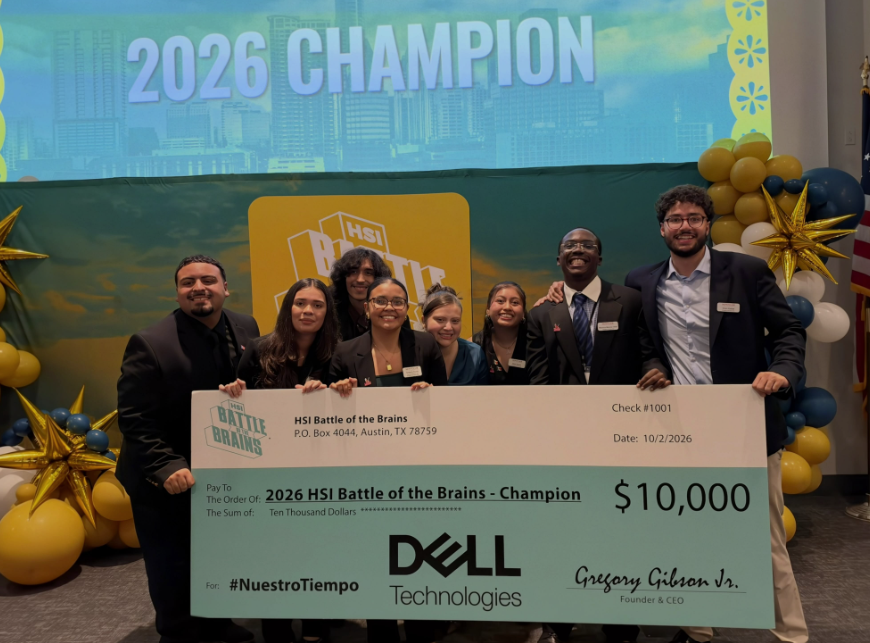
Congratulations to our students on an outstanding debut at the 2026 HSI Battle of the Brains, a national business and technology competition for students at Hispanic-Serving Institutions. They secured the $10,000 first-place prize, and one team member received an additional scholarship.
Special thanks to Marco Cordova (Office for Hispanic Initiatives) and Sabrina Sanichar (Feliciano School of Business), who advised the team and helped represent Montclair on the national stage.
|
|
|
|
CSAM Colleagues Bring IEEE International Conference to Montclair
|
Please join me in recognizing the many faculty and staff across the College of Science and Mathematics helping bring the 2026 IEEE International Conference on Intelligent Systems and Interdisciplinary Applications to Montclair State University this week, October 9-10.
Centered on the theme "Human-Centered Intelligent Systems for Human Wellbeing Advancement," the conference will convene an international community around AI and intelligent systems. Our colleagues are contributing their leadership and expertise across the conference's programming, publications, workshops, student activities and technical operations—a collective effort that reflects CSAM’s interdisciplinary spirit.
|
|
|
|
|
'Thinking Together' with Interim Provost Mili
|
|
|
|
Some of the most interesting ideas begin with a question, a curiosity, or a conversation that has no predetermined outcome. I am setting up a biweekly time for us to step away from the everyday and spend some time exploring questions and possibilities that matter to the university.
Every other week, we’ll gather for an informal conversation around a question, an idea, or something worth wondering about. There will be no presentation and no expectation that we arrive with answers—just an invitation to think, listen, and explore together.
Interested in joining? Sign up here.
|
|
|
|
|
|
|
Explore Previous Editions
|
|
|
|
|