News and Information from the Division of Academic Affairs
The Wide Wing from Academic Affairs

September 22, 2026


Dear Colleagues,

In his seminal book Sapiens, Yuval Harari writes, “So why study history? Unlike physics or economics, history is not a means for making accurate predictions. We study history not to know the future but to widen our horizons, to understand that our present situation is neither natural nor inevitable, and that we consequently have many more possibilities before us than we can imagine.”

I love this passage for many reasons, including the fact that it places imagination at the heart of education and human development.

Imagination also underlies many of the capabilities President Koppell introduced at our 2026–27 Town Hall: curiosity, collaboration, communication, emotional intelligence, innovation, and strategic mindset all require us to imagine possibilities beyond what we are familiar with.

History teaches us that at every point in the human

An open doorway reveals a misty mountain landscape, representing imagination and new possibilities.

trajectory, there were many possible paths. The world we inhabit today was shaped by choices made by people who could have chosen differently. Our present is not inevitable; our future is not predetermined.

Encountering other societies and cultures makes this insight immediate and tangible. We discover that the way we organize our families, communities, economies, governments, schools, and institutions is not the only way, and may not even be the best way. We encounter different answers to questions we thought had settled answers.

This is one of the great gifts of education: it expands the range of worlds we can imagine.

Empathy is an essential dimension of that imagination. By learning to see the world through other people's eyes, by encountering lives shaped by different histories and circumstances, we expand the range of perspectives we can understand and the futures we can envision.


Global education is therefore not an enrichment added to an education.

It is part of education itself.


For our students, this matters enormously. They will enter a world in which the problems they encounter, climate change, migration, epidemics, technology, inequity, do not stop at national borders. They will work with people whose experiences and assumptions differ from their own. They will need not only knowledge of the world, but the curiosity, humility, empathy, and imagination to navigate it.

Given the importance of global education, and the financial and practical challenges many of our students face in spending a semester or year abroad, can we imagine a Montclair approach to global education that brings these benefits to many more students?

At a time when the challenges facing international education might have led us to retrench, Montclair has chosen to do the opposite: to embrace global education fully, while rethinking how we deliver it. The question is not whether global education matters. It is how we can make it an integral part of a Montclair education in ways that are expansive, accessible, financially sustainable, and capable of reaching many more of our students.

This is the challenge we have given our new colleague, Dr. Takeo Suzuki, in his inaugural role as Vice Provost for Global Initiatives.

Takeo comes to Montclair with extensive experience in international education and a particular enthusiasm for creating opportunities for students. He jokes that having succeeded in bringing students to Chattanooga, Tennessee, he should certainly be able to bring students to Montclair. I love his spirit and energy for the task.

We have asked him to think beyond individual programs and traditional models: to create the greatest educational return from the resources we have, to build partnerships that can benefit many students, and to make meaningful global experiences an accessible part of the education we offer.

I invite you to read his guest feature below, which lays out the emerging approach and the opportunities ahead.

With my best regards,

Fatma


Guest Column

 
Building Montclair's Global Future, Together
By Dr. Takeo Suzuki, Vice Provost for International Academic Initiatives
and Chief Global Engagement Officer

When I arrived at Montclair this summer, one thing became clear to me very quickly: we already have many of the ingredients of a truly global university.

Our students bring the world to Montclair every day. Our faculty teach, research, create, and collaborate across borders. Our colleges and schools have relationships around the world. And we are located just outside one of the most global cities on earth.

Our opportunity now is to connect these strengths—and think bigger about what “global” can mean for a Montclair education.

For me, success cannot be measured simply by how many international students we recruit, how many

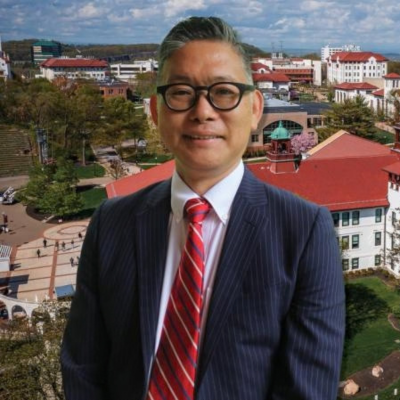
Vice Provost for International Academic Initiatives and Global Engagement Officer Dr. Takeo Suzuki.

students study abroad, how many agreements we sign, or how many countries we visit.

Those numbers matter, but they are not the goal.

From Global Engagement to Global Impact 

The goal is impact.

I want us to build a Montclair where every student has meaningful opportunities to engage with the world, whether that happens in another country, in a classroom, through research, an internship, a global partnership, or right here in New Jersey.

That means challenging some of the traditional assumptions about international education. A semester abroad can be transformational, but it cannot be our only model. Cost, work, family responsibilities, and many other realities make traditional study abroad difficult for many students. If global learning is truly part of a Montclair education, we need multiple pathways to make it possible.

We are already beginning this work. We are exploring new international partnerships and degree pathways, expanding opportunities for students to study, intern and conduct research abroad, strengthening our global recruitment, and thinking about how international partnerships can create opportunities not only for students, but also for faculty, research, scholarship, and the communities we serve.

But this cannot belong to one office—or even one division.

Some of Montclair's best global ideas are probably already sitting in the minds of our faculty, staff, and students.

One Question for Our Community:

What Should Global Montclair Look Like in Five Years? 

So I want to ask you one question:

What should Montclair's globalization efforts look like five years from now?

What opportunities should every Montclair student have? Where in the world should Montclair have meaningful partnerships and a strong presence? What should distinguish us from other universities?

Please email me your ideas at suzukit@montclair.edu. They can be ambitious, practical, unconventional, or something we have never tried before. I want to hear from faculty, staff, and students across our campuses. The global future of Montclair should not be designed by one office—it should be something we imagine and build together.

The world is changing quickly. Montclair should not simply prepare our students to enter that world.

We should prepare them to shape it, and I would like to ask one favor of our campus community.

Call for Action: Interested in Building a Degree Pathway with India? 

As President Koppell mentioned during the opening day event, we are working to connect Montclair more intentionally to the global stage. One of the places where I would like us to begin is India.

If you are a faculty member or academic leader interested in developing a degree pathway with an institution in India, please reach out to me. Building an international degree pathway is not a simple process. It requires academic alignment, the right institutional partner, careful planning, and coordination across many parts of the University. You do not need to know how to navigate all of that. That is where I can help.

At this stage, I am looking for strong interest from approximately five undergraduate programs and two or three graduate programs that would like to explore India partnerships with us. You do not need to have an Indian partner identified already. Bring me your academic program, your interest, and your ideas, and we can explore the possibilities together.

India is only a starting point. Our larger ambition is to think together about what it means for Montclair to be a truly global university.

Listening, Learning, and Just Getting Started 

I could not be more excited about what lies ahead. Since my first day at Montclair, I have spent much of my time listening and having conversations—by my count, about 72% of it! I have met individually with every member of the Montclair Global team, and I am so happy to have such talented and dedicated professionals on our team. They share my excitement about where we are going and, more importantly, are ready to help us get there.

I have also met with all of our deans, many faculty members, and students across our campuses. Every conversation has given me another idea, another perspective, or another reason to be excited about what we can build together. I am still listening, still learning, and just getting started. I cannot wait to see where we take Montclair next.


 

Takeo Suzuki, Ed.D.

Vice Provost for International Academic Initiatives

Chief Global Engagement Officer


Announcements


Call for Proposals: The Graduate Student Micro-Internship Program

The Graduate Center invites University units to propose a Graduate Student Micro-Internship for Spring 2027. The program funds short-term, project-based opportunities of up to 200 hours and $5,000, providing graduate students with meaningful professional experience while supporting a focused project within your unit.

Review the Call for Proposals for eligibility and application requirements, then submit the online proposal by Wednesday, October 7.

Register for the virtual information session to learn more: Friday, September 25, 10-11 a.m.

International Travel Requirements for Faculty

Faculty planning University-related travel outside the United States must complete the required export control steps before departure, even when the travel is unrelated to research. Requirements include submitting the export control screening checklist, completing the self-paced "U.S. Export Compliance" training through the CITI platform and submitting a spend authorization in Workday with the CITI completion certificate attached.

Questions about international travel or collaboration may be directed to exportcontrol@montclair.edu.


Congratulations and Kudos


Celebrating Our EOF Community in The Chronicle

Congratulations to Dr. Daniel Jean and the Educational Opportunity and Success Programs community on being featured in The Chronicle of Higher Education's report, "Helping Low-Income Students Graduate." The feature shines a national spotlight on the achievements of Montclair's staff, scholars and alumni, along with signature initiatives including the MEGA program, Barbershop series and The Brotherhood/La Hermandad.

Welcome Back to Our Faculty Returning from Sabbatical

Please join us in welcoming back several faculty members returning from sabbatical and celebrating the research, scholarship and creative work they pursued. Learn more about their accomplishments and the ideas and expertise they're bringing back to our classrooms and University community.


Upcoming Events

 
Instructure Canvas logo.

Create More Accessible Course Content

Faculty and instructors are invited to join OFE online on Friday, September 25, from 2-3:30 p.m. for "Creating Accessible Content in Canvas and Beyond."

Learn practical accessibility strategies for digital course materials and how tools such as YuJa Panorama can support your workflow. Registration is required.

Explore other events and workshops on OFE's calendar.

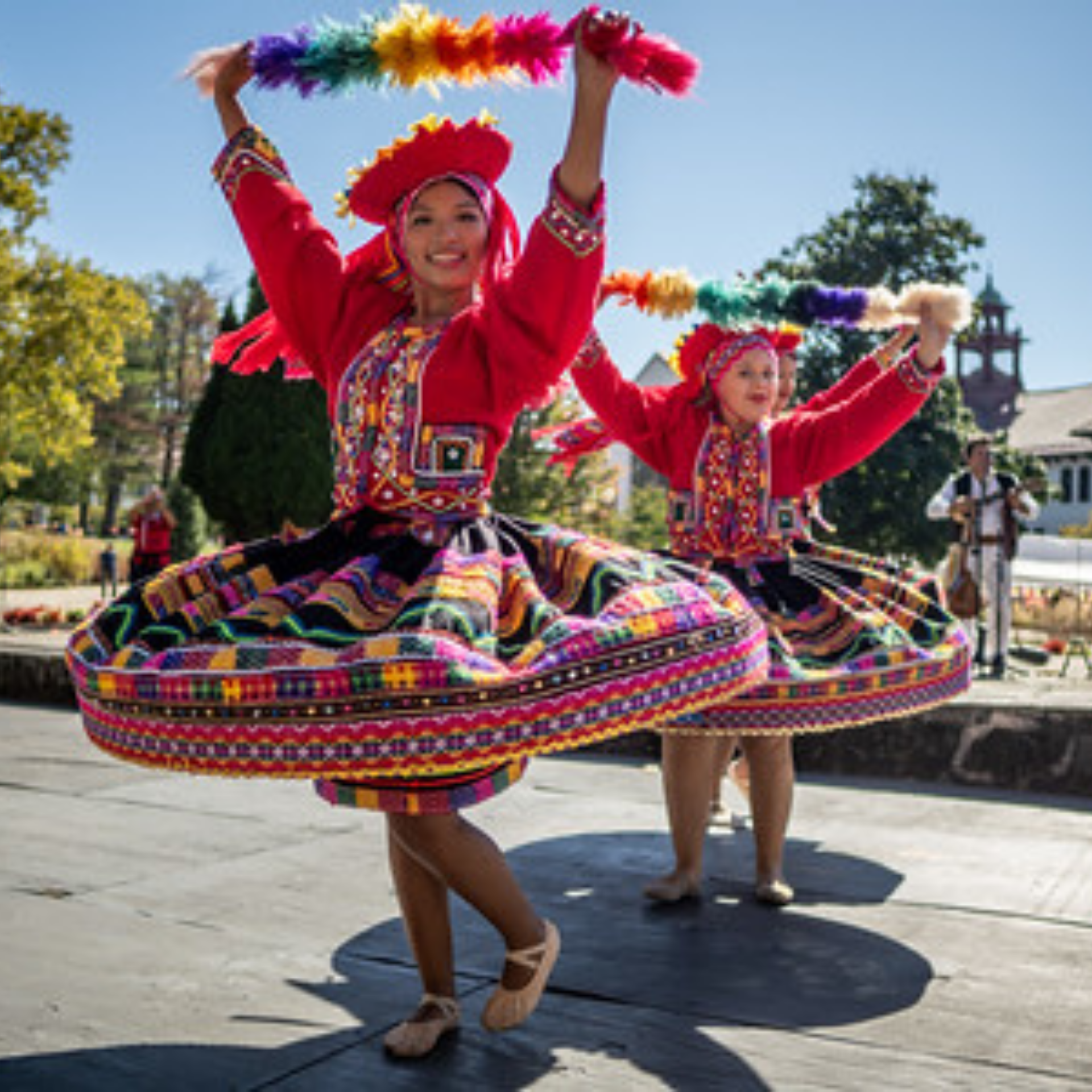
Two students smile while performing a traditional dance in vibrant, intricately embroidered Andean cultural dress.

Celebrate Andean Culture at Festival de los Andes

Join CLaSE for the second annual Festival de los Andes on Saturday, September 26 from 2-7 p.m. in the Amphitheater. 

Celebrate the cultures of Colombia, Peru, Ecuador, Bolivia, Argentina and Chile through live music and dance, regional food, art, hands-on workshops and cultural activities. The festival is free and open to all. RSVP to attend here. 

Explore other Hispanic Heritage Month 2026 events.


'Thinking Together' with Interim Provost Mili

 
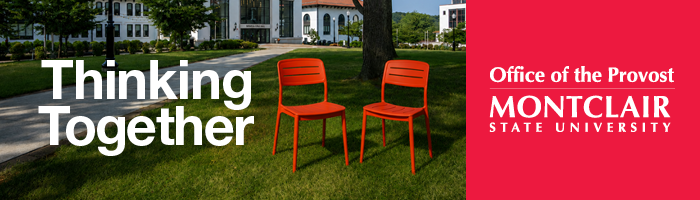
Banner image featuring two red chairs angled toward each other outside of a campus building with the words Thinking Together in big bold letters next to them.

Some of the most interesting ideas begin with a question, a curiosity, or a conversation that has no predetermined outcome. I am setting up a biweekly time for us to step away from the everyday and spend some time exploring questions and possibilities that matter to the university.

Every other week, we’ll gather for an informal conversation around a question, an idea, or something worth wondering about. There will be no presentation and no expectation that we arrive with answers—just an invitation to think, listen, and explore together. 

Interested in joining? Sign up here.


Quick Links 

Events and Workshops

  • ADP Center
  • Office for Faculty Excellence
  • Office of Inclusive Excellence
  • University Libraries

Tools and Resources

  • Academic Calendar
  • Administrative Calendar
  • Faculty Resources
  • Submitting a proposal? Don't forget your Research Security Training.

Explore Previous Editions

  • Explore past issues of The Wide Wing by date or by topic.

Office of the Provost
Susan A. Cole Hall, Suite 248
provostatmontclair@montclair.edu
973-655-7777

Montclair State University official logo.