Dear Colleagues,
Two weeks ago, I invited us to direct our intellectual curiosity inward, examining what we do, how we do it, and what becomes possible when we are willing to rethink long-held assumptions. Today, artificial intelligence and emerging technologies are among the forces most radically disrupting higher education.
For the past three years, universities have faced intense pressure to draft, announce, and lock in "AI strategies." Yet given the pace at which AI evolves, any rigid playbook written two years ago is already a historic document.
|
|
|
This mirrors the challenge that led us two years ago to resist a traditional, static strategic plan. Montclair chose a different path: a Strategic Framework. A compass rather than a map. Our Framework anchors us in our mission, provides directional intent, and highlights core priorities, giving us the agility to navigate a changing landscape without losing our bearings. The goal is not to predict the future perfectly. It is to build institutional capacity to keep learning as the future unfolds.
|
|
|
|
Our approach to technology follows this exact philosophy. Rather than locking ourselves into rigid pathways, we are progressively discerning principles to guide our decisions as capabilities evolve.
I want to offer four of these emerging principles, not as top-down mandates, but as reflections of the choices I see our campus community already making:
|
|
|
|
1. We will neither hide from AI nor embrace it blindly.
|
|
|
|
We must educate our students on the capabilities and applications of AI while remaining clear-eyed about its risks and ethical boundaries. Equal care must be given to creating deliberate spaces where learning happens best without AI. This balanced posture is reflected in the four AI course policy options available to faculty, allowing instructors to choose the framework that best fits their learning goals. I encourage you to read the guest feature by Senior Associate Provost Emily Isaacs and Chief Information Officer Suresh Murugan on our AI working groups.
|
|
|
2. We will not layer new technology onto old processes without intentional redesign.
|
|
|
|
Every technology rollout is an invitation to examine underlying workflows. New capabilities should prompt us to ask not merely, "How do we digitize this old process?" but "Given what is now possible, should we be doing this at all?" This mindset guided our deployment of Workday Student, where we chose to rethink legacy practices rather than simply automate them.
|
|
|
3. We will be active designers with the technologies we adopt.
|
|
|
|
The best way to understand an emerging tool is to deeply engage, experiment, adapt, and build with it. We see this actively in our partnership with Dreamscape Learn, where students engage in immersive VR biology and chemistry modules, and where faculty groups are actively co-creating new immersive curricula across disciplines. Please see Dean Keith Strudler’s guest feature on these efforts.
|
|
|
4. We will co-design and learn our way into the future.
|
|
|
|
The greatest privilege of a university community is the freedom to question the status quo, understand complex phenomena, and exercise agency in imagining what comes next. Technology and AI amplify that agency. They serve as both the tools and the subjects of our inquiry. I am looking forward to our first Wide World of Ideas session to explore and learn together. Please see the announcement below to sign up and participate.
The future is not a passive event happening to us; it is something we actively shape. AI is not an external force acting upon Montclair State University, but a capability we can learn with, question, and direct. In doing so, we have an extraordinary opportunity to rethink what a public university can be, and what it can become.
Warm regards,
Fatma
|
|
|
|
Explore Dreamscape Learn:
|
A New Home for Immersive Learning at Montclair
|
|
|
By now, you’ve probably heard something about our new VR learning initiative called Dreamscape Learn. You probably also have some questions – like what is it, or better yet, can I be involved, and how? Well, here are some answers.
In short, Dreamscape Learn is the University’s new virtual reality-based learning facility. It is officially open. And the campus community is invited to both experience it and learn how to propose new opportunities for our students.
|
|
|
|
|
Housed in the College of Communication and Media, Dreamscape Learn creates immersive learning experiences that allow students to explore, interact, and learn in ways that extend well beyond the traditional classroom. Students aren’t simply learning about subject material. They are surrounded by it.
The facility includes a 26-seat classroom and a free-roam virtual reality environment where students can physically move through and interact with virtual worlds. Both spaces offer multi-sensory learning experiences, including chairs that vibrate and fans that give the sensation of movement. For lack of a more eloquent description, it’s simply a lot of fun.
Dreamscape Learn at Montclair is beginning this semester with two courses that have been designed by Dreamscape – in biology and chemistry. Instructors from both disciplines are integrating these VR sessions into their introductory courses. In Biology in the Alien Zoo, students enter an immersive alien ecosystem, work together on virtual field missions, collect and analyze data, and apply scientific concepts to help save an alien species from extinction. Material in additional subjects, including Astronomy and Art History, will soon be released. And there are several immersive classroom environments – like teaching inside the Supreme Court or on the Moon – that faculty can use to hold a virtual classroom session.
But the most exciting part isn’t simply what already exists. It’s what can happen next. Montclair’s goal is to build new immersive learning experiences that serve our students and help faculty to create new ways of teaching and learning. In the upcoming months, there will be calls for faculty to pitch ideas for new VR lessons, ones that help you bring challenging concepts in your courses to life. Each year, we hope to create new immersive environments that serve students in disciplines across our colleges and schools. So if you have an idea, we want to hear about it.
And that’s not all. We’re already looking at building a curriculum to help teach Montclair students how to develop experiences for Dreamscape Learn, giving our students professional opportunities that support New Jersey’s growing media ecosystem.
To get started, Montclair faculty and staff are invited to visit the new facility, take a tour, and experience a Dreamscape Learn module firsthand. Whether you have a specific idea for a course or simply want to learn more about how immersive technology could support your teaching, a visit to Dreamscape Learn is a great way to start the conversation.
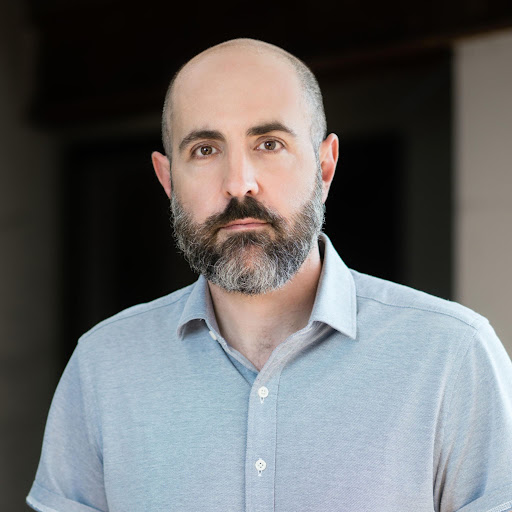
To lead this venture, Montclair is thrilled to welcome to campus Ben Schwartz (below), our new Director of Immersive Learning and head of Dreamscape Learn at Montclair, where he oversees the facility’s daily operations and will work with faculty to develop new virtual reality content and integrate VR-based learning across the university. An early adopter of virtual reality and recognized leader in the field of immersive media, Ben has spent more than two decades working with emerging media technology. Prior to joining Montclair, his work focused on the design and deployment of 4D volumetric video systems for VR, VFX, and artificial intelligence.
|
|
|
|
Please reach out to Ben to arrange a tour or talk about an idea for an immersive learning experience at schwartzbe@montclair.edu. And stay on the lookout for calls for lesson ideas. We’re excited for what the future will bring.
|
Keith Strudler
Dean, College of Communication and Media
|
|
|
|
|
The Working Group on Artificial Intelligence
|
By Emily Isaacs and Suresh Murugan
|
|
|
|
In the Spring of 2025, Senior Vice Presidents Gonzales and Durant formed the Working Group on Artificial Intelligence (AIWG), a cross-divisional group of managers, faculty, and staff charged to advise senior leadership on policies, best practices, and opportunities that support academic excellence, effective administration, and ethical innovation.
We are the co-chairs of the AIWG, a cross-University group of faculty and staff representing a wide range of disciplines, roles and perspectives.
|
|
|
|
|
Through the AIWG and related efforts, AI initiatives and activities abound; we seek to update you on a few highlights. To keep up with AI at Montclair, visit the AIWG page; or ask your favorite AI what is happening with AI at Montclair – interesting results.
AI Policy and Guidelines
A University AI Policy, drafted by the AI Policies Committee, will be distributed for open comment soon. The policy will cover how AI is acquired, used, and retired, with an emphasis on meeting ethical and legal data protection requirements, and differentiating between high-risk arenas (like admissions and grading) and low-risk arenas (like productivity and public data analysis).
Guidelines for Appropriate AI Use
Policies need to be durable, whereas guidelines are more flexible and subject to change. Units are encouraged to develop AI Guidelines to support users. For example, the Office for Faculty Excellence encourages faculty to DISCLOSE AND EXPLAIN. When you use AI to support your teaching, let your students know, and explain your choice – this is just what we expect of our students, and so we should model that practice.
Make your expectations around student use of AI clear – and explain it! All syllabi need an AI policy. Since decisions around AI use will vary by course and instructor, it’s essential that instructors communicate clearly about their expectations.
Guidelines for Faculty Use
The University Senate’s AI Committee, led by Yi Luo and Ashwin Vaidya, and the AIWG’s Policy Committee are teaming up to write further guidance on faculty use of AI. They will focus on using AI in a way that respects students’ privacy and FERPA rights, as well as students’ clear preference for human instruction, engagement, and evaluation.
The AI Curricular Development Committee has mapped AI and AI-adjacent courses and academic programs. It been working on considering how best to ensure undergraduates receive appropriate AI instruction – whether through a new requirement or through our existing systems. A subgroup of the committee (Jessica Brandt, Manveer Mann, Vera Senina, and Ilse Wambacq) has been accepted to the AACU AI Institute on Curriculum and Pedagogy, and they will be seeking input from the faculty regarding the best way to address this priority.
The AI Fluency and Competency Committee, with the Curricular Committee, has drafted a three-stage framework for fluency – for students and employees – seeking to identify foundational, intermediate, and advanced AI skills. In addition, they developed a list of AI Offerings for Professional Development – aimed at faculty and staff.
The Office for Faculty Excellence convenes faculty-to-faculty conversations as well as guidance on AI. All faculty and staff are welcome to attend; check the workshop schedule, which is regularly updated.
Executive Overview - New Jersey AI / Supercomputing Consortium Initiative
The State of New Jersey—under the leadership of the Governor’s Office, the Office of the Secretary of Higher Education (OSHE), and the New Jersey Innovation Authority (NJIA)—is rapidly establishing a statewide public-private AI and high-performance computing (HPC) research consortium. The initiative has evolved beyond a pure hardware deployment into a multi-institutional research and innovation ecosystem bringing together eight New Jersey research universities including Montclair State University, state agencies, SHI, NVIDIA, and industry healthcare partners.
For Montclair State University, participation offers a compelling strategic opportunity to scale our research infrastructure, support R1 trajectory goals, enhance faculty recruitment, and provide advanced compute access for faculty and students that would be cost-prohibitive to deploy independently. However, key financial, governance, and operating details remain under active negotiation across state working groups.
Montclair Representation & Governance Engagement: To ensure Montclair’s research, academic, and operational priorities directly shape consortium policies, institutional delegates have been established across state working groups:
|
- Governance, Allocation & Access Working Group:
- Dr. Stefanie Brachfeld (Vice Provost for Research)
- Michael Hacker (AVP for Strategy, Innovation and Transformation)
- Education & Workforce Working Group:
- Silvio Balzano (Deputy CIO)
- Dr. Xiaojun Qi (Director, School of Computing)
- Technical Working Group & Workshops:
- Michael Hacker (AVP for Strategy, Innovation and Transformation)
- Suresh Murugan (Interim CIO) and technical research leads
|
Critical Evaluation Criteria & Risk Factors:
Before Montclair enters into binding financial or contractual commitments, the following parameters must be formally resolved:
|
- Governance & Equity: Guaranteeing that mid-sized research universities receive equitable voting rights and allocation priorities relative to larger institutions.
- Total Cost of Ownership: Determining fixed membership dues, usage fees, network data transfer costs, and long-term operating obligations after state subsidies ramp down.
- Security & Regulatory Compliance: Defining technical controls, System Security Plans (SSPs), and liability boundaries for CMMC, NIST 800-171, HIPAA, and regulated research data.
- IP & Data Ownership: Standardizing cross-institutional intellectual property rights, data residency, retention policies, and commercial partner access terms.
|
Strategic Recommendation
Montclair should actively maintain a leadership position across all working groups to help shape consortium terms, while holding off on material financial or infrastructure commitments until governance rights, service level agreements (SLAs), compliance frameworks, and long-term cost structures are finalized.
|
Emily Isaacs
Senior Associate Provost for Faculty Affairs
|
Suresh Murugan
Interim Chief Information Officer
|
|
|
|
|
|
President Koppell's Lecture Series
|
|
|
|
|
|
Montclair 250: Migration, Identity and the American Nation
|
President Koppell continues "The American Experiment: 250 Years and Beyond" on Tuesday, October 6, at 2:30 p.m. in the College of Communication and Media's Presentation Hall with an exploration of how migration has shaped American identity, citizenship and belonging.
The lecture will place today's debates over borders, inclusion and national identity within a broader historical and constitutional context. Learn more.
|
|
|
|
Rethinking Our Place in the Age of AI
|
Join us Tuesday, October 27, for the inaugural event of The Wide World of Ideas, a new speaker series bringing our community together to explore timely questions and ideas shaping our world.
Educator, ethicist and author Mark Peres will lead "A New Story for the Age of AI: When Intelligence Is No Longer Exclusively Human," exploring how increasingly capable AI is challenging long-held distinctions between person and tool, relationship and simulation, autonomy and dependence—and what those shifts may require of our ethical frameworks.
The conversation will take place from 4–5 p.m. in the Feliciano School of Business, Room 140, followed by a book signing of The Accord from 5–6 p.m. Complimentary copies will be available to the first 50 registrants. Register early and join the conversation.
|
|
|
|
|
|
Explore the Mystical World of Italian Folklore
|
Join Montclair's Dr. Gina Miele this Thursday, October 1, 6:30-7:30 p.m., at Watchung Booksellers (54 Fairfield St, Montclair, NJ) for a conversation with Mark Rotella about her new book, Italian Folklore: Rituals, Celebrations, and Ancient Traditions. Explore a world of saints, witches, healers and enduring traditions drawn from Italy's rich cultural heritage.
Tickets are $5 and include a 10% discount on the book.
|
|
|
|
|
|
Homecoming and Family Weekend 2026
|
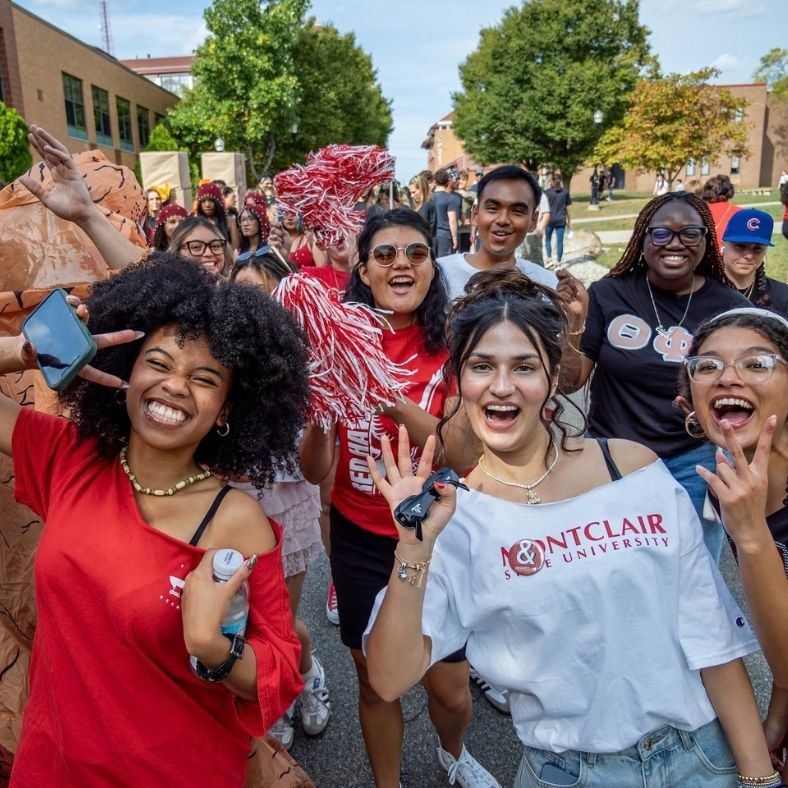
Join us for Homecoming and Family Weekend celebrating Red Hawk Pride, Friday, October 2 through Sunday, October 4!
There's something for everyone, including Bloomfield College Alumni Basketball Games, the Family Weekend Welcome Breakfast, Cooking with Koppell featuring new NJ PBS anchor Rob Nelson, the Alumni BBQ, the football game against Kean and more.
|
|
|
|
|
|
'Thinking Together' with Interim Provost Mili
|
|
|
|
Some of the most interesting ideas begin with a question, a curiosity, or a conversation that has no predetermined outcome. I am setting up a biweekly time for us to step away from the everyday and spend some time exploring questions and possibilities that matter to the university.
Every other week, we’ll gather for an informal conversation around a question, an idea, or something worth wondering about. There will be no presentation and no expectation that we arrive with answers—just an invitation to think, listen, and explore together.
Interested in joining? Sign up here.
|
|
|
|
- Graduate Student Micro-Internship Program: University units are invited to propose a Spring 2027 Graduate Student Micro-Internship, with up to $5,000 available for short-term, project-based opportunities. Review the Call for Proposals and submit your proposal by Wednesday, October 7.
- Participate in Community Impact Day: Faculty, staff and alumni are invited to participate in Community Impact Day on Thursday, October 22, from 8:30 a.m. - 4:30 p.m. at several on- and off-campus locations.
- Update Your Directory Profile: Please be sure to update your directory profile to include a photo; you can also add your CV, research interests and a brief biography by following the How to Update Your Profile guide.
|
|
|
|
|
|
|
Explore Previous Editions
|
|
|
|
|